Monday, January 20, 2014

Inner and Outer Vision

The human body is a sensory process. Each of our sense organs takes in information that we imbue with meaning. For the month of May, get ready for a unique experience as we explore the function of each organ (think grade 9 biology refresher) and a kriya to create awareness and healing for that organ.

Lights, Camera, Action

When light hits the eye, the cornea helps the eye focus as light makes its way through. Behind the cornea are the iris, pupil, and anterior chamber. The iris is the colourful part of the eye. The iris has muscles attached to it that change its shape. This allows the iris to control how much light goes through the pupil. 

Inner and Outer Vision

The pupil is the black circle in the center of the iris, which is really an opening in the iris, and it lets light enter the eye. After light enters the pupil, it hits the lens. The lens sits behind the iris and is clear and colourless. The lens' job is to focus light rays on the back of the eyeball - a part called the retina. 

Your retina is in the very back of the eye. It holds millions of cells that are sensitive to light. The retina takes the light the eye receives and changes it into nerve signals so the brain can understand what the eye is seeing. 

Think of the optic nerve as the great messenger in the back of your eye. The rods and cones of the retina change the colours and shapes you see into millions of nerve messages. Then, the optic nerve carries those messages from the eye to the brain. 

Tears also keep your eye from drying out, keep the eye moist and provide expression through laughter and crying. 

Movement

Your eye muscles also need to be stretched. We tend to use our eyes in limited ways, staring at a computer screen, reading, driving and watching TV. For the most part we don't use our eye muscles fully. In this Kundalini Yoga Kriya for the eyes, you use all the muscles of your eyes, bringing circulation and a full range of motion available to your eyes. For optimal health, the eyes need exercise and rest.


Rest for the Weary

But what about eyestrain? The word is a bit of a misnomer, says Eli Peli, a professor of ophthalmology at Harvard Medical School. Peli says that vision happens in the brain, not the eyes; therefore, sitting at a computer isn't a strain for the eyes in the sense that it causes trouble for their muscles. Instead, the fatigue you feel is your brain asking for mercy. "The brain, in its smart way, projects fatigue onto the eyes, so you'll take a break."

Photo Credit: Conner Downey

Monday, January 13, 2014

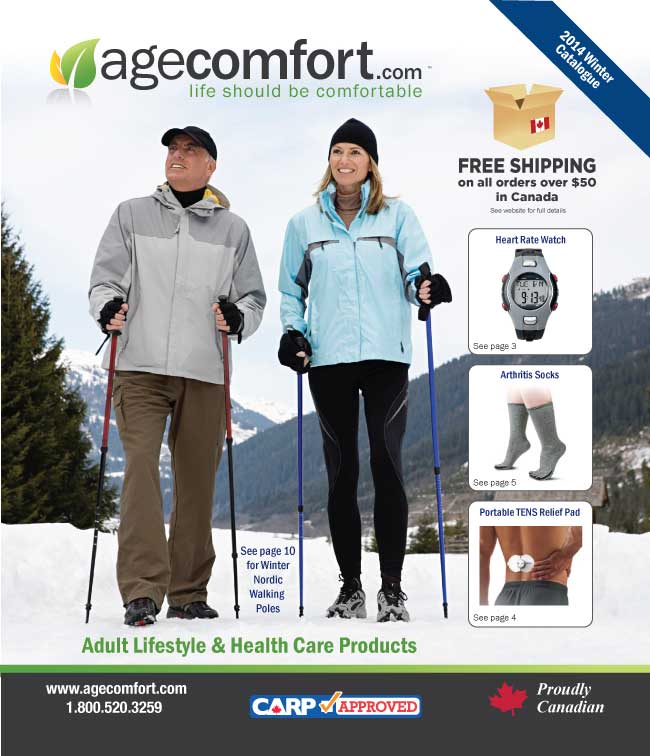
Our Winter 2014 Flyer is Out!

Our Winter 2014 flyer is out!

Brrrr.... Winter is here, and we got you covered! This flyer is packed with great aids to help you get through the winter season. Go ahead, and take a look at our winter flyer for amazing items at hot prices.

View the flyer online or request a copy by mail here

cover-page-winter-2014.jpg

Some of the great features of this new flyer include, Nordic Walking Poles, Arthritis Socks, Heart Rate Watch, Portable TENS Relief Pad, Flu Prevention Medications, Physical Therapy and Daily Living items, and many other products designed for a variety of people.

The Anti-Alzheimer’s Diet

Eating more olive oil, nuts, fish, poultry, and certain fruits and vegetables and limiting red meats and high-fat dairy products may help ward off Alzheimer's disease.
The Anti-Alzheimer’s Diet 
Evidence that links specific nutrients to the prevention of dementia has turned up regularly from labs around the globe. But in the real world, people don't eat nutrients, they eat food. And they eat combinations of different foods, so researchers at Columbia University Medical Center in New York analyzed the diets of more than 2,000 men and women age 65 and older in New York City to find out how eating patterns relate to dementia. 

The participants, who were free of dementia when the study began, were evaluated for signs of Alzheimer's disease every 18 months of about four years. At the same time, the researchers analyzed their diets to pinpoint foods that contained nutrients previously linked to Alzheimer's disease - such as those high in saturated fats including red meat, butter, and cream - as well as those linked to a lower risk of the disease - foods rich in "good" fats and brain-healthy vitamins such as almonds, olive oil, and oily fish. By the end of the study,253 participants had developed Alzheimer's disease. 

One eating pattern stood out as especially protective. Those least likely to be stricken with Alzheimer's consumed a combination of foods rich in brain-healthy nutrients including olive oil and vinegar, nuts, fish, poultry, vegetables like broccoli, cauliflower, and cabbage, green leafy vegetables, and fruits, including tomatoes. They also ate less red meat, butter, and high-fat dairy products. 

"The men and women who adhered most closely to this eating pattern had a 38 percent lower risk of developing Alzheimer's disease," says neurologist Nikolaos Scarmeas, M.D., one of the study's authors. "The combination of foods was most important. That's where you get the benefit."

Scarmeas cautions that it's too soon to offer firm advice about diet and Alzheimer's disease. However, research shows that nutritious foods can improve cardiovascular health and lower cancer rates. "And there are hints they may be helpful for brain disease, so it makes sense to eat them," he says. 

"This study supports what past studies have shown," says Martha Morris of the Human Nutrition Research Center on Aging at Tufts University in Boston. "The diet the authors identify as good is consistent with current recommendations."

By: AARP

Photo Credit: Wonderlane

Tuesday, January 7, 2014

Is it Safe to Leave Someone with Alzheimer's Alone?

What to consider when you loved one with Alzheimer's disease is home alone. 

alzheimers


Wandering
Will they stay at home or wander off? Is there a nearby store or coffee shop they like to visit? If you are concerned with wandering, consider double locks with a key, ID bracelets, and wandering registries. 

Do they know how to reach you and emergency assistance? 
Keeping emergency numbers such as family contact information and 911 beside each phone is an obvious and bolded format is important if anything should happen. 

Rummaging or hiding of household items
It is best to lock up all toxic and hazardous products and medications in a secure place. You may also wish to simplify the home by removing clutter and valuable items that may be hidden, lost or misplaced by a person with AD. Provide them with their own "safe box" or treasure chest to store objects.

Do they show signs of agitation, depression or withdrawal if left alone?
Being left alone may increase the stress experienced by a person with AD. Once agitated they may cause damage to themselves or the home, may leave. It may be challenging to calm them down once you return. 

Can they recognize dangerous situations? 
Can they identify signals such as smoke or fire alarms that would alert them of potential dangers? if they cannot recognize dangerous situations they may cause harm to themselves or others and are most likely unsafe to be left alone. 

Do they have frequent life-threatening health emergencies? 
Consider whether they have a history of heart attacks, strokes or seizures. Leaving them home alone, especially if it may cause them stress, may increase their risk of a health emergency. Carrying an emergency response button may help if they recognize it's use in a crisis situation.

Hallucinations, Illusions and Delusions
Due to complex changes in the brain, people with AD may see or hear things that have no basis in reality. Medical therapy and home adaptations may help to reduce their occurrence (soft lighting, clean area, familiar items). However there are serious risks to leaving them alone. 

Do they attempt to use the stove or other appliances unattended? 
You will need to evaluate the safety of leaving them home alone if they regularly attempt to use the stove, appliance, repair, woodworking tools or other former hobbies and activities. 

Do they have keys and access to a vehicle? 
Unfortunately, a person with AD loses independence, which is very frustrating. If they cannot follow the safety hazards enough to drive alone it may be best to hide the keys and remove the vehicle from sight. 

Follow-up plan
Write down Doctors and Social Workers contact information, as well as follow up appointment dates and times. Make sure you have all needed instructions for follow-up care such as rehab exercises and diet, when preparing to leave the hospital.

Home care helps
Caregivers with dementia experience are loving professionals who can assist with daily activities and provide respite for family caregivers. A variety of schedules are available and each client receives personalized attention.

By: Cindy Stead, Private Home Care Expert at AgeComfort.org Health Care Resource Centre

Tuesday, December 24, 2013

Happy Holidays!

From everyone at AgeComfort.com, we would like to wish you a comfortable holiday season and a happy new year!

Thursday, December 19, 2013

The Benefits of Nintendo Wii on Older Adults

If you had asked me ten years ago what I thought of adults playing video games, I would have responded with, "not in this lifetime." At that time, it was normal to see kids sitting in front of their televisions with handheld controllers maneuvering various characters through levels of varying degrees of difficulty.

In the fall of 2006, Nintendo introduced the Wii. Unlike gaming systems before it, the Wii had a wireless controller that could detect movement, two notable features that, at the time, was not available on any other gaming console. Nintendo's intent with the Wii was to change that way we play video games, as well as introducing video games to a wider audience. 

While still a student, we often had discussions about who would benefit from the Wii, who was more likely to play, and whether or not the older generation would catch on. Fast forward a few years later. I find myself working at a retirement community that utilizes the gaming system with their residents. The first time I had to facilitate the program, I was curious to see how they would do and who exactly would be participating. 

260px-Wii-ConsoleWhen the program began, i noticed that there was a good mix of people who had played before and would never dare miss the program, and those who had never touched a video game, but were curious to see what it was all about. The game we played for the afternoon was Wii Bowling. Interestingly, all the participants were former bowlers at one point or another, either competitively or internationally. The game accurately mimicked the movements of a person bowling to the extent that the residents who had bowled before were able to easily and quickly learn the game and how to use the controller. 

Over time, the benefits of participating in the program were clear. Residents were becoming more social with one another, often calling each other in advance to ensure their friends were coming, confidence increased as their skill level improved, and their tolerance level for activities was increasing as they wanted to play for longer and longer. 

So why exactly has the Nintendo Wii been so successful in attracting new gamers in the adult population? Interactive video games render standard video games more accessible. Participants are able to customize characters that look like them, dress like them, and the can even name them. In addition, by allowing the controller to be wireless, the participant is able to freely move about without the fear of getting tangled in the equipment. The detection of movement in the controller is an undeniable benefit, allowing the participant to directly control the video game by having the game directly mirror their movements. The participant is able to immediately see the results and consequences of how their movement affects the game. 

Elizabeth H. Weybright et al's study stated that video games have been associated with improved attention and reaction time, improvements in knowledge acquisition and retention, and significant increases in positive emotions. Video games use skill selection and cumulative levels, paired with visual graphics to increase engagement, attention and concentration. The results for the participant finishing a level or reaching a milestone goal is the feeling of achievement (Weybright, Dattilo & Rusch, 2010).

The Nintendo Wii, specifically the bowling game, offers participants both physical and cognitive stimulation that could greatly benefit the older adult population. They have made the gaming system user-friendly by eliminating multiple buttons and simplifying the controller. Physically, the game requires the use of the upper extremities, lower extremities (if standing), core stability, balance, and both gross and find motor control. Cognitively, participants must be able to attend to a task, follow directions, coordinate hand/eye movement, and be able to remember sequences, as a sequence of buttons need to be pushed on the controller to start, continue, or play the game (Weybright et al., 2010). Gaming systems have changed quickly within the last few years, and unbeknownst to me, it was only a matter of time before technology became appealing to the masses, including the older generation. 

By: Anna Luu, Recreational Therapist Expert at AgeComfort.org Health Care Resource Centre

References

Weybright, E., Dattilo, J., & Rusch, F. (2010). Effects of an interactive video game (nintendo wii) on older women with mild cognitive impairment. Therapeutic Recreation Journal, 64(4), 271-287.

Photo Credit: Wikipedia

Tuesday, December 10, 2013

8 Winter Fall Prevention Tips for Seniors

Ah, winter. Blizzards, freezing temperatures, visiting the ER because you fell on ice. For kids, winter is an exciting time. They love playing in the snow and sliding around on the ice. For senior citizens, all that ice and snow means an increased chance of slipping and falling.
Here are eight things you can do to make winter a less perilous:

1. Check you footwear. 

Examine your shoes and boots. How's the traction? Is it time for a new pair? Better traction can help keep you more stable on icy surfaces. 

2. Make sure you are equipped with a shovel and salt. 

The reason you need a shovel and salt is so you don't have to walk on a slippery sidewalk. If you have to traverse through the snow and ice to get to your garage where the salt and shovel are kept, that defeats the purpose. 

3. Check the railings. 
8 Winter Fall Prevention Tips for Seniors
If you have railings leading up to your front door, check to see if they are sturdy. If you slipped, would they be able to support you? 

4. Carry a cell phone. 

Bring a cell phone when you leave the house. If you fall, it can sometimes be hard to get p. Carrying a cell phone whenever you go out can bring peace of mind. 

5. Slow down. 

Allow extra time if it's slippery out. It's when you hurry that you end up pushing the envelope of what your balance can handle. Also, keep in mind that being a little late is better than rushing and causing a fall. 

6. Ask for help. 

If you have to walk across an icy sidewalk or parking lot, try to find a steady are to lean on. Most people are happy to help an older person navigate a slippery walkway? You just have to ask. 

7. Have a plan. 

When you are going out, ask yourself, "If I slipped and fell here, what should I do? 

8. Strengthen your legs. 

Strong leg muscles can help you steady yourself if you slip. And if you do fall, they make it a lot easier to get back up. You should exercise your legs regularly to keep them strong. Try walking up and down your stairs repeatedly or do a set of ten squats out of a chair a couple times per week. 

These little things, when used together, can make the winter elements a little less daunting. 

You can also prevent falls with better balance. Senior fitness expert Mike Ross has developed a system of balance exercises for the elderly that can be done at home with no equipment. You can find the exercises in his new book, "The Balance Manual". 


Photo Credit: Let Ideas Compete

Monday, December 2, 2013

Let the Liver Live!

Let the Liver Live!Think of your liver. It sits in the upper right area of your abdomen, protected by your rib cage. This reddish brown organ weighs about 2 kilograms and it does everything from help digest the French fries you ate last night, helps to heal the cut on your baby finger and stores that extra bit of glucose you used up running for the GO Train. It's a multi-tasker for sure.

In both Traditional Chinese Medicine (TCM), the liver, ensures energy and blood flow smoothly thoroughly the body. It also regulates bile secretion, stores blood, and is connected with the tendons, nails, and eyes.
Emotions like anger, resentment, frustration, irritability, bitterness, "flying off the handle" are also connected to the liver. 

Both TCM and ayurveda attribute liver challenges to heat that is trapped in the liver, and they seek to clear and cool the organ through lifestyle changes and herbal treatments. 

Ayurveda views the liver as "hot" or "pittic" because the fiery, dynamic energy of pitta - one of the three doshas (along with vata and kapha) that regulate the physiological functions of the body - guides and supports these myriad functions of the liver. Too much fiery energy, can accumulate in the liver and lead to physical problems. Ayurveda describes symptoms caused by excess pitta that are very similar to what is called "liver fire" in TCM: headaches; flushed face; red burning eyes; acne; nosebleeds and outbursts of anger. Ayurveda adds inflammation, allergies, and symptoms of indigestion (like heartburn) to the list. 


Live for Your Liver


Overall, both ancient wisdom and modern science agree that how we live has a huge effect on our liver. So even though you can't avoid chemical contaminants completely, you can keep your liver healthy if you just take care of it by following these 5 suggestions: 

Eat Light

Eat good-quality food when you are hungry. Avoid over eating (more liver burden) and refined or heavily processed food. 

Move your Bowels

High-fiber diets help keep the bowels, liver, and blood clean by facilitating elimination. Drink water throughout the day. And if you drink coffee or tea, add a glass of water for each. 

Take a Break

Fast on fresh juices for a day - or even just a meal - every week or two. Take time to breathe deeply, relax, and meditate. 

Cut Down on the Chemicals

Minimize exposure to chemicals of all sorts - from food additives and cosmetics to caustic cleaning agents. Remember that the liver needs to break down every chemical entering the body either for use or excretion. 

Bitter is Better

Experiment with bitter salad greens or a liver tonic like Milk Thistle for six to eight weeks. Note any changes in body, energy, or mind. 

This is a very tasty recipe that has been used traditionally for liver health:

Beet the Carrot Casserole:

1 bunch beets
1 lb carrot
2 bunches scallions chopped 
3 cloves garlic minced
4-6 tbs olive oil or ghee (clarified butter) or butter
Braggs Liquid Aminos and black pepper to taste
Grated cheddar cheese or soy cheese to taste 

Scrub beets and carrots. Steam beets whole. When half done (ten to twenty minutes) add carrots. Cook until tender yet firm. Remove beet skins. (They slid off). Grate beets and carrots with coarse grinder. Loosely (so colours stay distinct) mix them together. Saute the scallions and garlic. Toss this mixture with the beets and carrots, Braggs and black pepper. Put in casserole dish. Cover with grated cheese and bake until cheese is golden. 

Podcast: Let the Liver Live!

Photo Credit: Walmart

Tuesday, November 19, 2013

What is a Cataract?

Cataract Pic 1If the human eye is compared to a camera, then a cataract can be considered as a cloudy lens in the camera, resulting in blurry images.

Normally, the crystalline lens is clear and transparent, allowing light to filter through to be perceived by the retina, which then sends the light signal through the optic nerve to the brain to be processed. A cataract, i.e. a cloudy lens, loses its transparency over time, and as a result, light rays are unable to pass through freely and the vision becomes foggy and blurry. Here is an excellent animation explaining cataract formation. 

cataract-example

What causes a Cataract?

Aging

I often tell my patients, "like wrinkles and aging spots, if we live long enough, we are all going to develop cataracts at some point of our lives." Over time, the proteins that make up the crystalline lens start to clump together and the lens eventually loses transparency. By the age of 80, more than half of the population will either have a cataract or already had cataract surgery. Although cataract is largely an age related issue. I am starting to see more and more young patients developing early cataracts in their 50's and even 40's. Below are a list of factors that contribute to early cataract formation.


Tobacco Smoking 

We all know smoking is bad for you. Examples include cancer, heart attack, stroke, and COPD, just to name a few. Adding one more to the list is BLINDNESS. It's a well known fact that smokers are 500% more likely to develop Age Related Macular Degeneration. Smoking also triples the rate of cataract formation. That's all the more reason to start quitting smoking. 


Diabetes

Many medical diseases increase the rate of development of cataracts. Among them, Diabetes Mellitus (DM) is probably the most common cause. DM is associated with 5-fold higher prevalence of cataracts. High blood sugar level causes the lens to swell up and loses its ability to focus light and image. However, as with most complications of diabetes, maintaining good control of your blood sugar levels will help reduce your risk. 

img_1383

UV Rays (including welding flashes)

The damaging effects of UV rays are well known. You can't see these invisible rays, but they certainly can damage the lens causing cataracts. Proper sunglasses are the key to protect your eyes especially if you spend long hours under the sun. Look for UV 400 on the labels for complete coverage of the UV rays. I like the old transition lenses poster, "these are your eyes without UV protection, any questions?"


Medication

Although cataract is largely an age related issue. More and more young patients are developing early cataracts in their 40's even 50's especially if they are on long term use of oral steroids. Crohn's disease, lupus, arthritis are just a few examples of systemic conditions that may require long term steroid treatment. If you are someone who is on oral steroids, be sure to see your optometrist regularly for cataract assessment. 


Trauma 

Trauma to the head and the eyes disrupts the protein in crystalline lens and will result in opacification of the clear lens thus leading to early cataracts. Patients who had prior accidents that resulted a blow to the head and eye area such as a bad fall, a motor vehicle accidents, and accident at work, are all at risk for developing traumatic cataracts. Also, patients who participate in high impact sports like football, wrestling, boxing...etc, are strongly recommended check their eyes regularly as well.


Treatment 

vi7_cataractsurgeryWhen the cataract is mature enough, cataract surgery can be performed to remove the cloudy lens. A standard cataract surgery usually takes 10-15 minutes. No hospital stay is needed, which means cataract surgery is done in an out-patient basis! There has been amazing technological advancement when it comes to cataract surgery in the last decade. It's a lot safer, a lot more precise, and with the newest surgical methods, patients will no longer need to depend on glasses!

When the cataract is removed, an artificial lens implant inserted to replace the natural crystalline lens. OHIP covers for the standard cataract surgery with the standard basic lens implant. However, the being said, there are numerous premium lens implant choices available. There are lenses that block UV rays to protect the retina; there are aspheric lenses which is optically more superior and gives you sharper vision; there are lenses that correct for astigmatism. Finally, multifocal lens implants allow patients to see both far and close up distances, essential eliminating the need for glasses after cataract surgery!

The newest advancement in cataract surgery is a procedure called Laser Refractive Cataract Surgery. It's a whole new level of precision and reproducibility in cataract surgery. It creates a clean incision and breaks up the lens fragment with laser, allowing the surgeons to remove the cataracts with utmost accuracy! It does come with a hefty price tag, but it certainly is an option worth contemplating. 


After Cataract Surgery

You will need eye drop medication to help the healing of the wounds, antibiotics to prevent eye infection, and anti-inflammatory to reduce the inflammation. After you are finished with all your eye drops, your surgeons will let you know when it's time to return to your Optometrist for regular follow-up. The prescription after the cataract surgery will be very different from what you have before the surgery, and Optometrist can give you a new and updated prescription. Most likely it will just be a simple reading prescription as the cataract surgery aims to eliminate your distance prescription. 

It is important to continue your annual eye exam with your Optometrist. We will continue to monitor if there is any changes to your eye health such as development of glaucoma and ARMD. Furthermore, secondary cataract can arise years after cataract removal, and it will require laser treatment to clean the film off the lens implant. So come in and have your regular eye examination and help fight low vision.

By: Rachel Lin, Vision & Eye Care Expert at AgeComfort.org Health Care Resource Centre

Wednesday, November 13, 2013

Front Lines - Yoga for the Skin

Front Lines - Yoga For the SkinDeepa wanted to clear up her skin. She was tired of the flare ups, the expensive lotions and potions that never quite covered the spots or stopped them from showing up in the first place. She wanted to explore natural remedies.

Your skin is the largest organ in your body. It is your perimeter, regulating temperature, allowing interaction with the environment through the sensation of touch. Your skin is porous, whatever you put on your skin eventually makes its way into your body. 

Your skin is a mirror of what is happening inside your body. Toxins in the organs, unresolved emotions, genetics, drugs, alcohol and eating habits all play a role in the health of your skin. Think of your skin life a filtering system, as important to your digestion as your colon and liver. Most of us will blame our skin issues on the choice of food we make. There is usually much more at play. 

When Deepa reflected on what else was happening in her life, she admitted that she was undergoing a stressful transition at work. These changes at work left her feeling angry, her sleep was disrupted and her eating habits were taking a turn for the worse. 

Here are some new ideas for Deepa. When dealing with an emerging emotion, it is best to eat the opposite of what you are craving. Fresh, raw food allows the body to cleanse and brings emotions into our awareness. 

A regular yoga practice offers support when introducing new habits and shifts in behaviour. Long term, these options provide relief where heavy make-up and medicated creams cover up issues or hide our true selves from the world. 

Natural Remedies: 

1) Drink 2-4 cups of chamomile tea daily as an inner cleanser for the skin.

2) Green grapes can be eaten for a clear complexion. They are high in vitamin C, magnesium and potassium. 

3) Dry skin brushing - a soft bristle brush used over your body before showering helps remove dead skin cells and promotes good circulation. 

4) Make a paste out of tumeric and water spread over the face and then rinse with warm water. 

5) Make a face exfoliant using seat salt and sesame oil. With light pressure massage scrub onto face and then rinse with warm water. 

Try this medication: 

Sitali Pranayam is known for its anti-inflammatory properties. It's an ultimate quick fix when skin flares up! It's great to curb symptoms of rosecea. It's also a gentle liver cleanser. Inhale through a curled and extended tongue. Exhale through the nose. Do 26 of these breaths per practice session. Ideally do 26 in the morning and 26 in the afternoon. 


Photo Credit: Kukhahn Yoga